New Year’s Resolutions: future forms

I have to admit, I do love a lesson on future forms. If you’re interested in more, we have a number for you to choose from:

This lesson is obviously quite timely given the month but it very much focuses on analysing different future forms and highlighting how they are often used together. While the context is making resolutions on social media, the lesson goes on to show how these forms can be used in a range of different contexts.
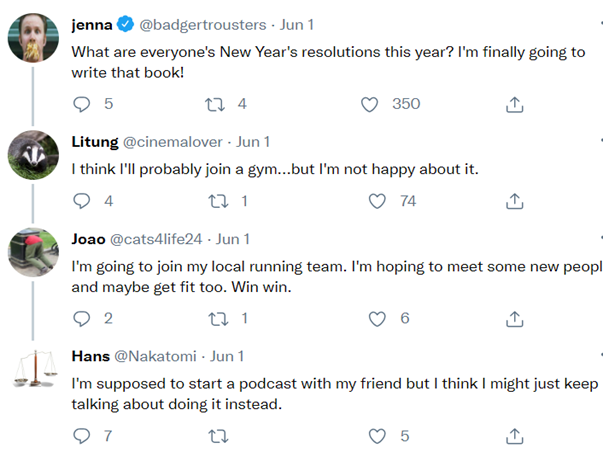
  • Level: Pre-intermediate – Upper Intermediate.
  • Time: 90 minutes.
  • Objective: by the end of the lesson, learners will be better able to discuss their hopes and plans for the future.
  • Vocabulary focus: collocations for activities / hobbies.
  • Grammar focus: be going to / will / might / be supposed to.
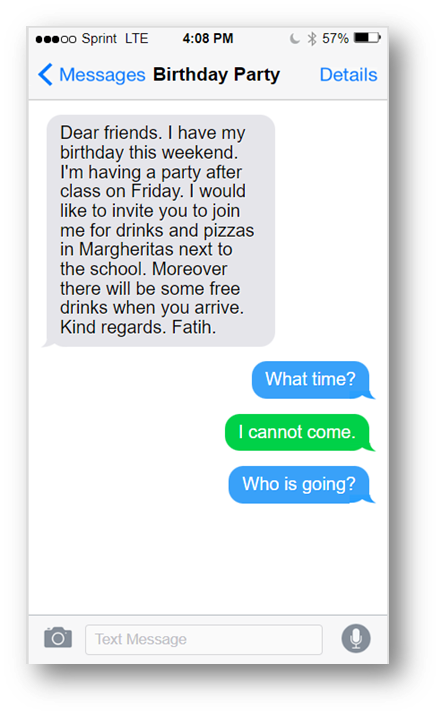
Text Messages: making & discussing plans (using the present continuous)

These days whether at work or in our personal lives, so much communication happens via social media messaging or texting apps. I can’t imagine my life without the ability to set up segmented groups of friends to organise events, work on projects or chat about inane interests.

We are big fans of using text messages for lessons for this reason but also because it is this beautiful hybrid of written and spoken English. More so than that, it is written spoken-English, which means you can easily teach or practise many speaking skills and conversation layouts in this more controlled medium of messaging.

Bringing text messaging into the classroom has many advantages. You can practise conversations at a slightly slower pace; it gives you more to feed back on as at the end of a text conversation, you can see everything that has been written, a luxury we aren’t afforded when monitoring a speaking activity; but above all, it mirrors real-life communication.

In this lesson we look at a common conversation of someone inviting a group of friends to a birthday event.

  • Level: pre-intermediate / intermediate
  • Time: 120mins

Materials:

Christmas Invite: “will” & participle clauses

This one is quite grammar heavy but there are a lot of skills in there as well. The biggest one is analysing grammar in context and this lesson draws heavily on Danny Norrington Davies’ idea of asking students “why” a particular language point has been chosen in this particular situation. We’ve really found that doing this little and often encourages our students to ask the same question of the language in the world around them.

Try it out and let us know how it goes.

  • Level: Intermediate / Upper Intermediate
  • Time: 90mins – 2 hours
  • Age: Adults
  • Objective: To be able to write an engaging invite to an event


Material:

This time for the material, I’ve gone with a presentation instead of a worksheet. I’ve tried to make the slides as intuitive as possible but let me know if you have any questions.

Email invite